As an Amazon Associate, Espressora earns from qualifying purchases. We research published manufacturer specifications so you can compare machines on facts, not marketing.
The heating system is the single biggest factor separating a $200 espresso machine from a $1,500 one. Before you compare brands, it helps to understand the three ways home espresso machines heat water: thermoblock (or thermocoil), single boiler, and dual boiler. Each has real trade-offs in heat-up time, temperature stability, and milk-steaming workflow.
Below, we break down how each system works and anchor the explanation with published specs from machines you can actually buy: the Breville Barista Express, DeLonghi La Specialista, Gaggia Classic Pro, Rancilio Silvia, and Breville Dual Boiler.
Thermoblock and Thermocoil: Fast Heat, Compact Footprint
A thermoblock heats water on demand as it flows through a heated metal block or coil, rather than holding a reservoir of hot water. There is no boiler to preheat, so these machines are typically ready in under a minute.
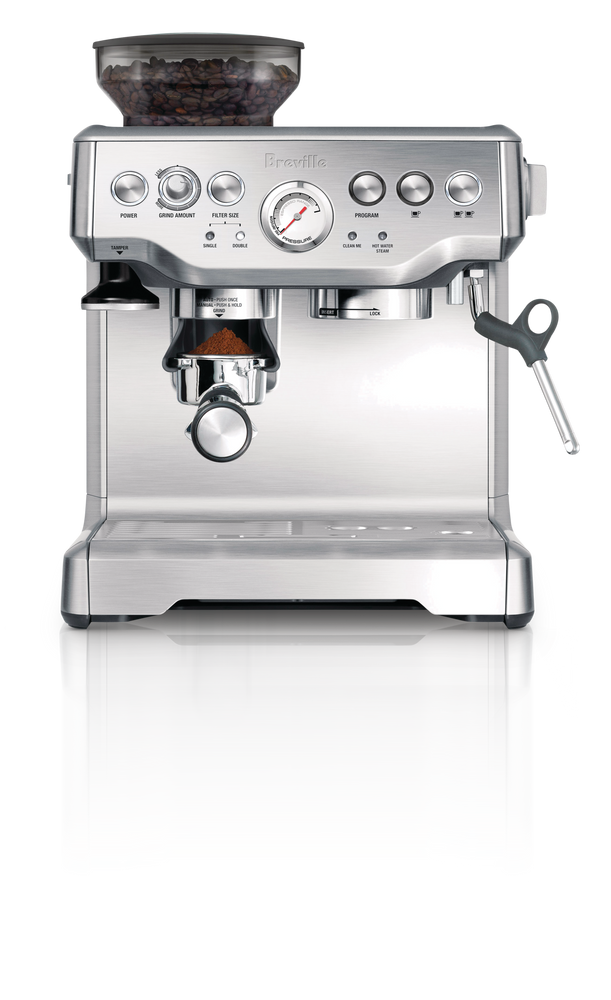
Breville Barista Express (BES870XL). Breville’s published specs list a 1600W thermocoil with an integrated stainless steel water path, plus digital PID temperature control. The 15-bar Italian pump feeds a 54mm stainless steel portafilter, and the 67-ounce water tank means fewer refills. Because the thermocoil heats on demand, Breville also includes a purge function that runs a short burst of water after steaming to bring the system back to brew temperature.
DeLonghi La Specialista (EC9335). DeLonghi uses two independent thermoblock heating systems — one for brewing, one for steaming — with a 19-bar pump and 1450W power draw. The dual-thermoblock layout is DeLonghi’s answer to the classic thermoblock weakness: waiting between brewing and steaming. It also integrates an 11-setting conical burr grinder and a smart tamping station.
Who it suits: thermoblock machines suit beginners and anyone who values speed and simplicity. The trade-off is temperature stability: with no thermal mass of stored hot water, shot-to-shot consistency depends heavily on the manufacturer’s temperature control (Breville’s PID, DeLonghi’s dual blocks).
Single Boiler: The Classic Compromise
A single boiler holds a small reservoir of heated water used for both brewing and steaming. Because steam needs a higher temperature than brewing, you switch the boiler between “brew mode” and “steam mode” — which means a short wait when moving from pulling a shot to frothing milk.
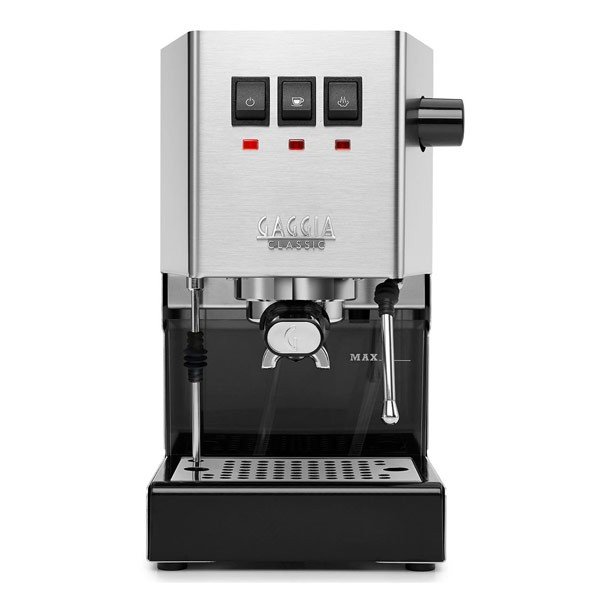
Gaggia Classic Pro (E24). Gaggia’s official specs list a single-boiler/dual-use configuration with a lead-free brass boiler (3.5 oz capacity, 1370W boiler wattage), a 15-bar Italian Ulka pump calibrated to 9 bar via the OPV, and a 72-ounce water reservoir. Total power draw is 1425W at 110–120V. The brass boiler is a meaningful upgrade over the aluminum boilers in older budget machines, improving thermal stability.
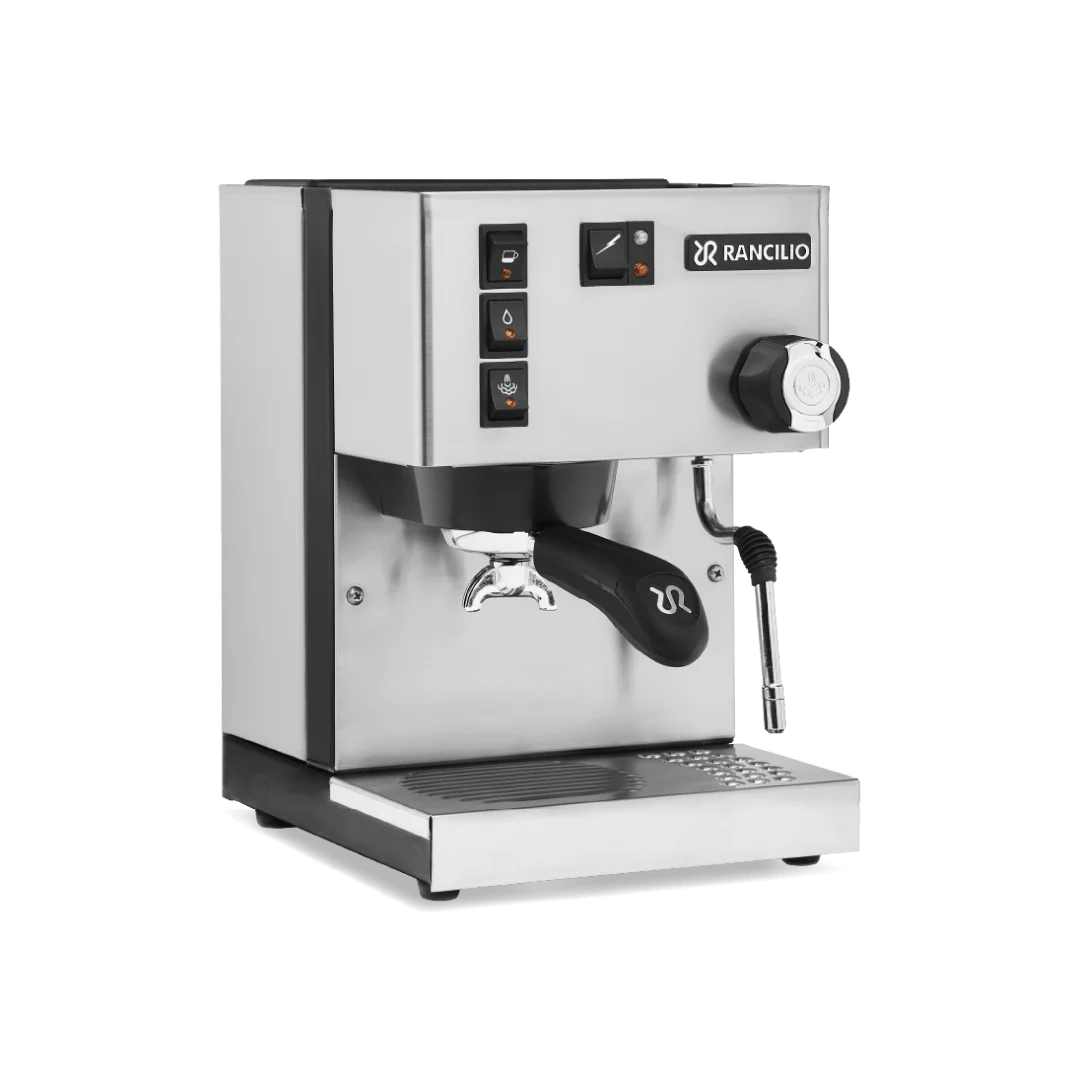
Rancilio Silvia. The Silvia pairs a 300ml (12 oz) brass boiler with an 1100W heating element and a 58mm commercial-grade portafilter. Published dimensions are 9.2 × 11.4 × 13.4 inches at roughly 30 pounds, with a 2-liter removable water tank and a three-way solenoid valve. Note that the stock Silvia has no PID controller — temperature management is manual, which is why PID retrofit kits are popular for this machine.
Who it suits: single-boiler machines suit espresso purists who mostly drink straight shots or Americanos and only steam milk occasionally. You get real boiler thermal mass and commercial-standard 58mm portafilters at a moderate price, but milk-heavy households will feel the brew-steam waiting.
Dual Boiler: Brew and Steam Simultaneously
Dual-boiler machines dedicate one boiler to brewing and a separate boiler to steaming, each held at its ideal temperature. You can pull a shot and texture milk at the same time — the defining workflow advantage.
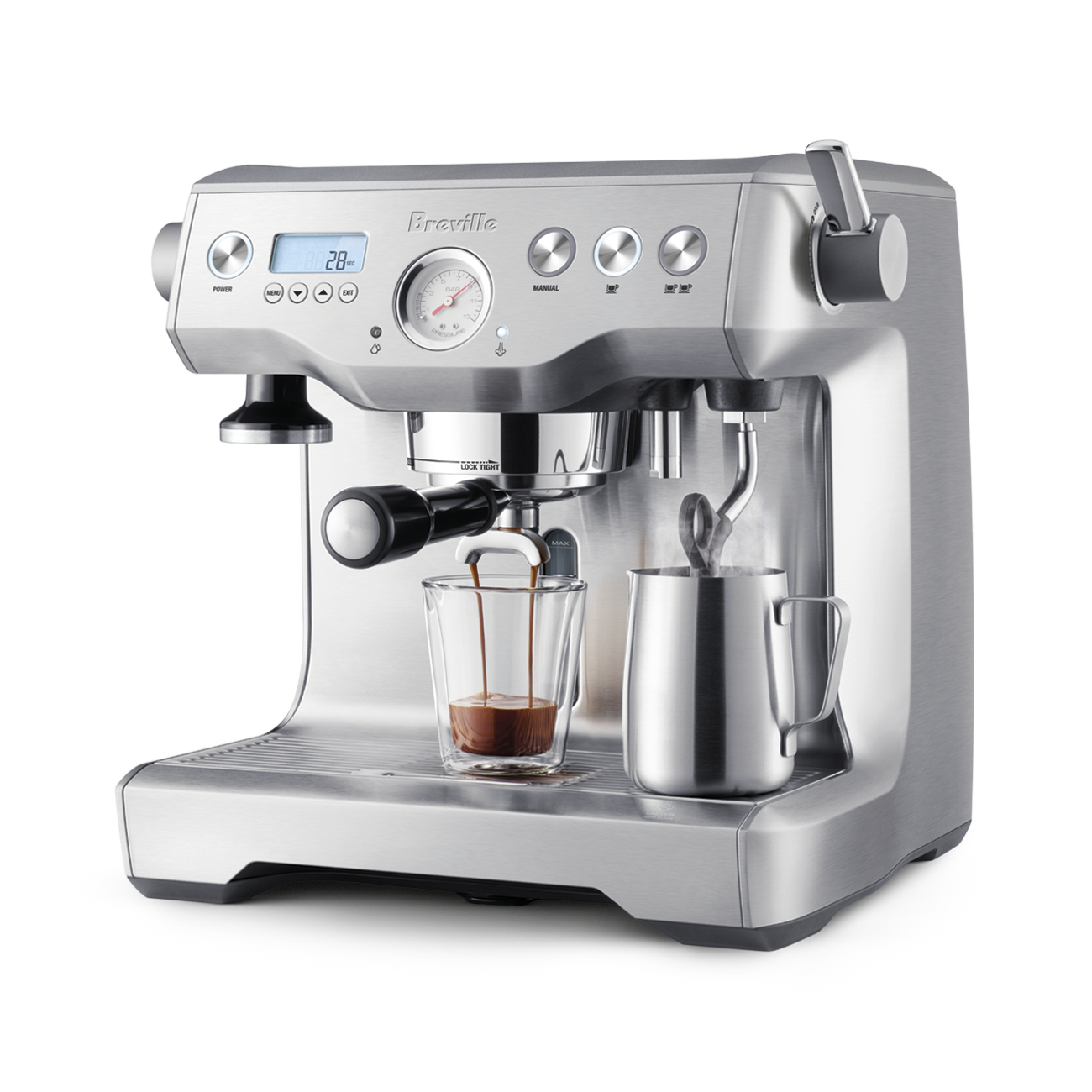
Breville Dual Boiler (BES920). Breville’s published specs describe stainless-steel dual boilers plus a PID-controlled heated group head, dual 15-bar Italian pumps, and a 58mm stainless steel portafilter with a 22-gram dose capacity. The 84-ounce water tank, LCD shot clock, and low-pressure pre-infusion round out a prosumer feature set. Power draw is 1700W at 110–120V, and the footprint is 15.9 × 14.7 × 14.9 inches.
Who it suits: dual boilers suit households that make multiple milk drinks daily or anyone chasing maximum temperature stability. The cost is literal — bigger footprint, higher power draw, higher price — and there is no built-in grinder, so budget for a separate espresso-capable grinder (see our conical vs flat burr grinder guide).
Side-by-Side: Published Specs at a Glance
| Machine | Heating system | Pump | Portafilter | Power |
|---|---|---|---|---|
| Breville Barista Express | 1600W thermocoil, PID | 15-bar Italian | 54mm | 1600W |
| DeLonghi La Specialista | Dual thermoblock | 19-bar | 51mm* | 1450W |
| Gaggia Classic Pro | Single brass boiler, 3.5 oz | 15-bar Ulka, 9-bar OPV | 58mm | 1425W |
| Rancilio Silvia | Single brass boiler, 300ml | Vibratory, 15-bar | 58mm | 1100W |
| Breville Dual Boiler | Dual stainless boilers + heated group, PID | Dual 15-bar Italian | 58mm | 1700W |
*Portafilter size for La Specialista Arte (EC9155) per published specs; verify against the specific variant.
Which Boiler Type Should You Choose?
- Pick thermoblock if you want the fastest heat-up, the smallest learning curve, and an all-in-one machine with a grinder. The Barista Express and La Specialista both bundle grinding, which saves counter space and budget.
- Pick single boiler if you want commercial-standard parts (58mm portafilter, 3-way solenoid) and the best espresso quality per dollar, and you can live with a short wait before steaming.
- Pick dual boiler if your household makes several milk drinks a day and you want simultaneous brew and steam with PID stability. Plan to buy a grinder separately.
Whatever you choose, pair it with a grinder that can actually grind fine enough for espresso — a blade grinder or coarse drip grinder will bottleneck even the best machine. Our burr grinder buying guide and espresso grind and dosing guide cover the other half of the setup. You can also browse the Espressora homepage for our full espresso setup coverage.
3 thoughts on “Espresso Machine Boiler Types Explained: Thermoblock vs Single Boiler vs Dual Boiler”
Comments are closed.