
As an Amazon Associate, Espressora earns from qualifying purchases. We compare machines on published manufacturer specifications, not marketing claims.
Every espresso machine needs a pump. Brew pressure is what forces hot water through a finely ground, tightly tamped puck of coffee, and the accepted target for that pressure is 9 bars. Two different pump designs create that pressure in home and commercial machines: the vibratory pump and the rotary pump. Both can pull excellent espresso, so the choice between them comes down to noise, pressure consistency, lifespan, and cost rather than taste alone.
This guide explains how each design works, what the differences mean for your daily routine, and which real machines use which design. The examples below are machines you can buy today: the Gaggia Classic Pro and Breville Barista Express on the vibratory side, and the Lelit Bianca V3 and Rocket Espresso R58 on the rotary side.
What the pump does during a shot
The pump pressurizes water from the tank or water line and pushes it through the coffee bed in the portafilter. A shot pulls for about 25 to 30 seconds at the full 9 bars, and how steadily the pump holds that pressure shapes the extraction. If pressure swings, water finds the path of least resistance through the puck, and some grounds over-extract while others under-extract. What matters is which design holds pressure steady through the whole shot.
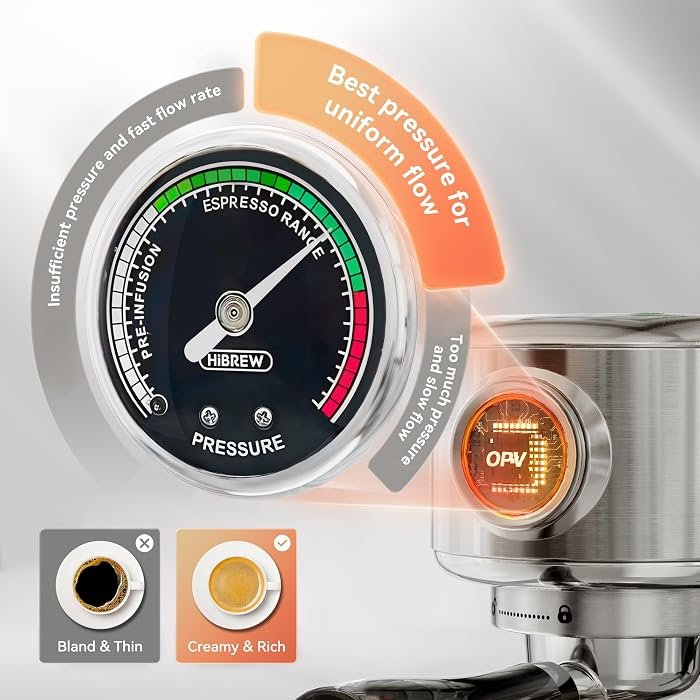
Pump pressure and the pump rating on the box are two different numbers. A pump rated at 15 bars can build up to 15 bars of pressure, but espresso still extracts at 9 bars, so most machines include an over-pressure valve that bleeds off the excess. When you read “15 bar” on a spec sheet, you are reading the pump’s maximum, not the pressure of your shot.
How a vibratory pump works
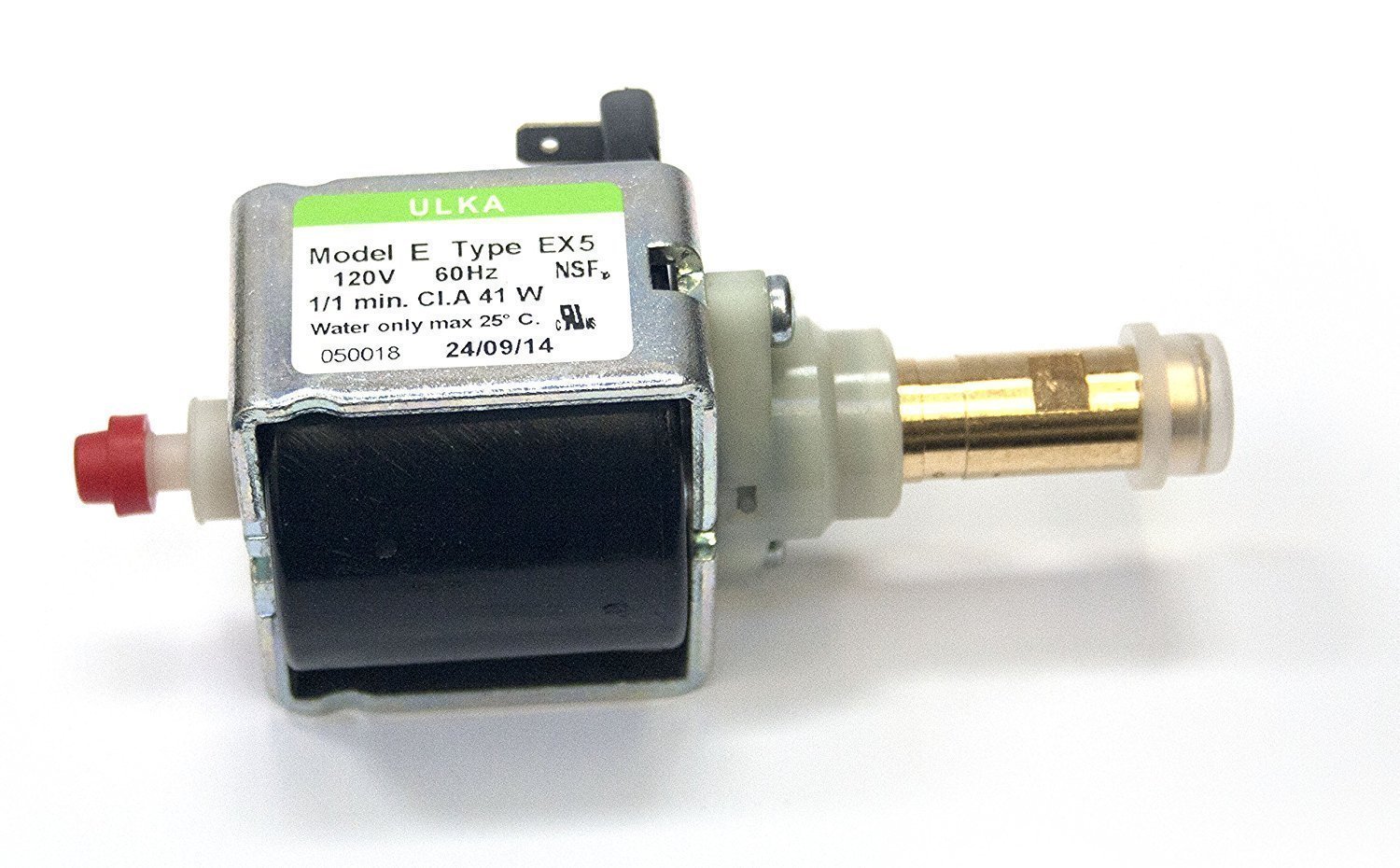
A vibratory pump uses an electromagnetic coil to drive a small piston back and forth about 60 times per second. Each pulse pushes a little water forward, which builds pressure in short, repeated bursts. The best-known example is the Ulka EX5, a compact Italian-made unit found in a huge share of home espresso machines.
Two traits follow from that pulsing action. First, a vibratory pump is loud. The rapid oscillation produces a distinctive buzz that you can hear through a closed kitchen door. Second, the pump’s pressure output depends on flow rate: maximum flow happens at zero pressure, and pressure peaks when flow stops. In practice that means the pump is more sensitive to changes in puck resistance, so a slight rhythmic pulsing on the pressure gauge during a shot is normal behavior for this design.
Manufacturers handle the pulsing with an over-pressure valve. Gaggia, for example, ships the Classic Pro with a 15-bar Ulka pump and an over-pressure valve that regulates brew pressure down toward the 9-bar target. The pump’s real strengths are elsewhere: it is small enough to fit inside compact machines, inexpensive to make, and easy to replace, with a typical home-use lifespan in the range of five to six years before it needs a swap.
How a rotary pump works
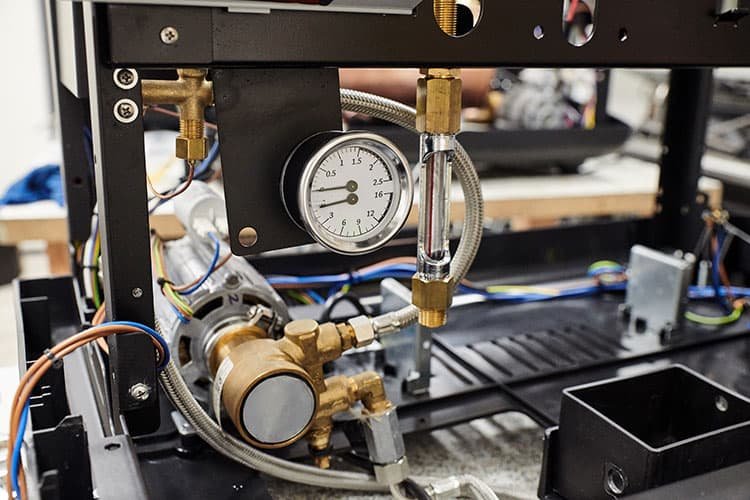
A rotary pump uses an electric motor to spin a disc fitted with vanes inside a housing. The spinning vanes sweep water through continuously, so pressure arrives as a smooth, uninterrupted flow instead of pulses. The result is a steady pressure reading on the gauge and a much quieter hum, closer to an aquarium pump than to a power tool.
Rotary pumps also decouple pressure from flow rate. Whether the puck resists a little or a lot, the pump holds the set pressure without the pressure-versus-flow trade-off that vibratory pumps face. That steadiness is why rotary pumps are the standard in commercial machines, where pulling dozens of shots in an hour has to feel identical at shot one and shot one hundred.
The other defining feature is plumbing. A rotary pump draws water with enough consistency to connect directly to a water line, so many rotary machines can be plumbed in, skipping the tank entirely. The trade-offs are size and cost: the pump and its motor are physically larger, which is why rotary machines sit in a higher price bracket, and servicing the pump usually means a technician rather than a do-it-yourself swap.
Vibratory pump machines you can buy
Most home espresso machines in the entry and mid range use vibratory pumps, and two of the best-known examples show the range the design covers.
The Gaggia Classic Pro pairs a 15-bar Ulka vibratory pump with an over-pressure valve, a 1370W heating system, and a 58mm commercial-standard portafilter. The machine ships without a grinder, so it assumes you will bring your own espresso-capable grinder. The pump buzz is the classic home-espresso soundtrack, and when the pump eventually wears out, the replacement is one of the cheapest parts in the machine.
The Breville Barista Express lists a 15-bar Italian pump with a 1600W thermocoil and PID temperature control, plus a built-in conical burr grinder that removes the separate grinder purchase. It is the other end of the vibratory range: the same pulsing pump principle, packaged for a buyer who wants one box to contain the whole setup. If you go this route, our espresso grind size and dosing guide matters more than the pump spec: grind and dose decide more of the shot than anything else.
The honest summary of the vibratory side: the pump is not the limiting factor in these machines. Grind quality, dose consistency, and puck preparation decide the result far more than the pulsing action ever will.
Rotary pump machines you can buy
Step up to the prosumer tier and rotary pumps take over.
The Lelit Bianca V3 lists a rotary pump in its published specifications, alongside a dual boiler setup with separate brew and steam boilers, PID temperature control, and a flow-control paddle on the E61 group head. The rotary pump makes the machine quiet and lets it hold steady pressure while the paddle varies flow by hand, which is the combination that pressure profiling needs. It runs from a 2.5-liter tank or can be plumbed directly into a water line.
The Rocket Espresso R58 pairs a rotary pump with a dual boiler layout and E61 group. Retailer spec sheets list it with the same rotary design, the same plumbing option, and the same general profile: a quiet, steady machine built for daily use over many years. These are machines people keep for a decade, and the rotary pump is a large part of why that lifespan is realistic.
The price of entry is real. A rotary pump, its motor, and the larger chassis they require put these machines in a different budget category than anything with a vibratory pump. What you buy is consistency, quiet mornings, and a machine that can be repaired and rebuilt rather than replaced.
What actually changes in the cup
Both pump types produce excellent espresso. Retailers and roasters who sell both kinds say the same thing: the difference shows up in noise, longevity, and pressure consistency, not in a blind taste test.
Where the difference is real is at the edges. A vibratory pump’s pulsing output makes the machine more sensitive to puck problems, so poor distribution or channeling shows up faster in the cup. A rotary pump’s steady pressure is more forgiving of small puck imperfections and more revealing when you are dialing in a light roast to a specific profile. If your household drinks mostly milk drinks, the gap narrows further: milk texture decides most of a latte, and our semi-automatic vs super-automatic guide covers where that texture comes from.
Noise, plumbing, and maintenance
Noise is the most immediate difference you will notice. A vibratory pump buzzes, and the sound carries. A rotary pump hums at a much lower volume, which matters in an open-plan home or for early-morning shots while the house sleeps.
Water supply is the second practical split. Vibratory pumps work with a tank or a water line, but they are most at home with a tank, which keeps the machine compact and portable. Rotary pumps are designed to be plumbed in, which removes refills entirely but commits the machine to a fixed spot near a water connection. Our boiler types guide covers the heating systems these pumps feed, which matters when you are thinking about the machine as a whole water circuit.
Maintenance follows the price split. A worn vibratory pump is a common, cheap replacement that many owners do themselves. A rotary pump lasts far longer between services, but when it does need attention, the job usually goes to a technician who can check seals, lubrication, and flow rate against the manufacturer’s schedule.
Side-by-side on published specs
| Machine | Pump type | Listed pump pressure | Plumbing | Check price |
|---|---|---|---|---|
| Gaggia Classic Pro | Vibratory (Ulka) | 15 bar, regulated by OPV | Tank | Check price on Amazon |
| Breville Barista Express | Vibratory | 15 bar (Italian pump) | Tank | Check price on Amazon |
| Lelit Bianca V3 | Rotary | Rotary, 12 to 15 bar range on retailer sheets | Tank or direct water line | Check price on Amazon |
| Rocket Espresso R58 | Rotary | Rotary pump, dual boiler | Tank or direct water line | Check price on Amazon |
Which pump type fits your setup
Choose a vibratory pump machine if you make a few drinks a day, keep the machine on a tank, and would rather spend the budget on a better grinder than on a quieter pump. The Gaggia Classic Pro and Breville Barista Express both prove that the pump is not what holds back home espresso: a good grinder and careful puck preparation close the gap completely.
Choose a rotary pump machine if you pull multiple shots daily, quiet mornings matter, you want a direct water line connection, or you are buying a machine to keep for ten years. The Lelit Bianca V3 and Rocket Espresso R58 are built around that use case, and their rotary pumps are a large part of the premium.
Either way, match the pump to the life around the machine, not to a taste difference. Grind fresh, dose the same amount every time, and distribute the grounds evenly. Those three habits matter more than which pump pushes the water.