As an Amazon Associate, Espressora earns from qualifying purchases. We compare machines on published manufacturer specifications, not marketing claims.
The most useful question when shopping for an espresso machine is how much of the brewing process you want to do yourself, rather than which brand to buy. Semi-automatic and super-automatic machines sit at opposite ends of that answer, and the right choice depends on your mornings more than on any spec sheet.
A semi-automatic heats water and pushes it through the coffee at pressure. You grind the beans, dose and tamp the grounds, lock in the portafilter, and decide when to stop the shot. A super-automatic keeps the whole chain inside one case: whole beans go into the hopper, and espresso comes out at the press of a button, with milk drinks on models that include an automatic milk system.
This guide explains what each type asks of you, where drink quality actually differs, and what ownership costs look like over a few years. The models below are machines you can buy today: the Breville Barista Express and Gaggia Classic Pro on the semi-automatic side, and the De’Longhi Magnifica S and Philips 3200 Series on the super-automatic side.
What a semi-automatic asks of you
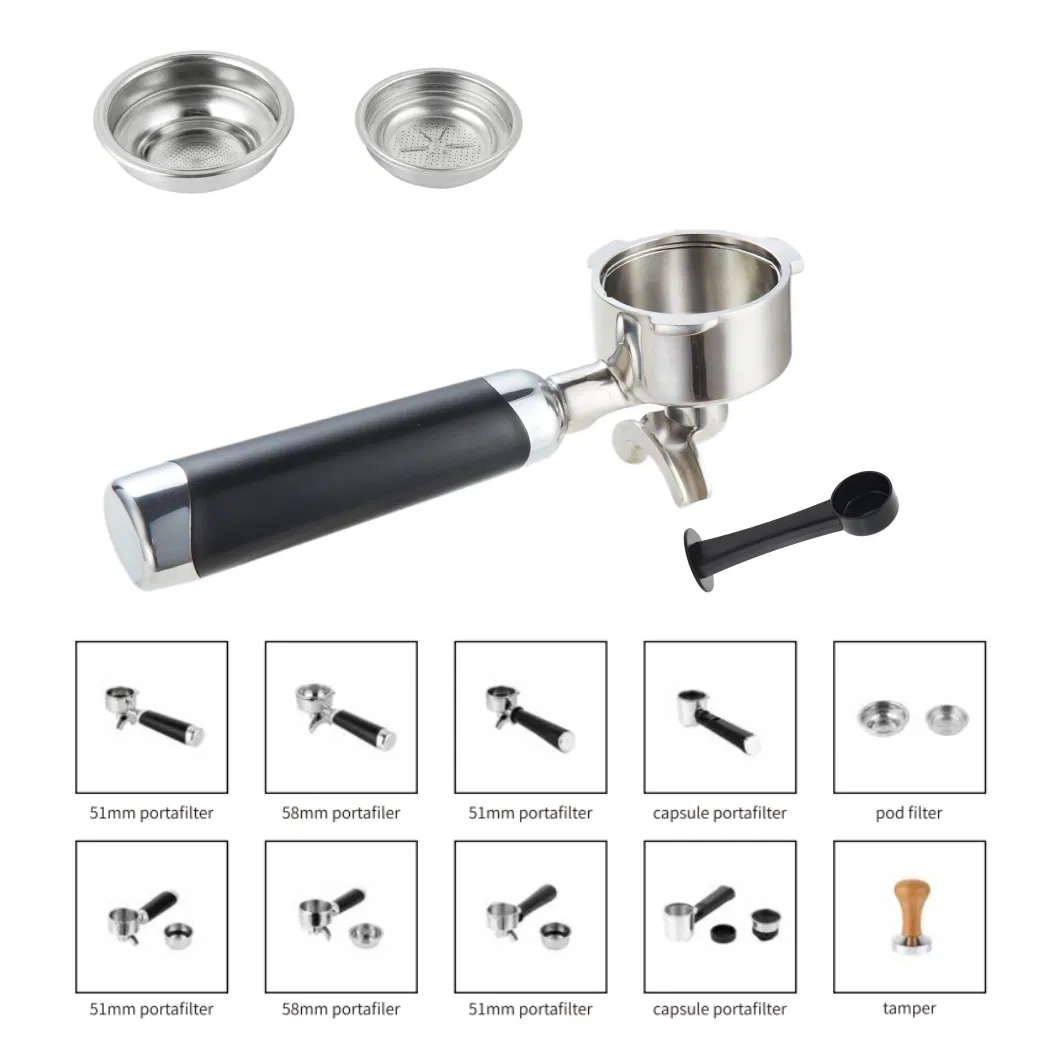
With a semi-automatic, the machine owns water temperature and pump pressure. You own everything the coffee touches before that: grind size, dose weight, distribution in the basket, and tamp pressure. Those four variables decide whether a shot runs in 25 seconds or chokes at 45, and learning them is the actual hobby.
Breville Barista Express (BES870XL). Breville’s published specs list a 1600W thermocoil with PID temperature control, a 15-bar Italian pump, a 54mm stainless steel portafilter, and a 67-ounce water tank. The reason this machine sells in its price bracket is the built-in conical burr grinder: it removes the separate grinder purchase that every other semi-automatic requires, which keeps the total setup cost and counter footprint down.
Gaggia Classic Pro. Gaggia’s published specs list a single brass boiler (3.5 oz, 1370W), a 15-bar Italian Ulka pump regulated to 9 bar by an over-pressure valve, a 58mm commercial-standard portafilter, and a three-way solenoid valve. There is no grinder included, so the Classic Pro assumes you already own an espresso-capable grinder or will buy one. What you get in return is commercial-standard parts and a machine that rewards practice.
The honest trade is control against consistency. A practiced semi-automatic user can pull shots a super-automatic cannot match, because dose and tamp are adjustable per bean. The same control means your first two or three weeks of shots will be uneven while you learn. If you go this route, read our espresso grind size and dosing guide first: grind and dose decide more of the result than the machine does.
What a super-automatic does for you
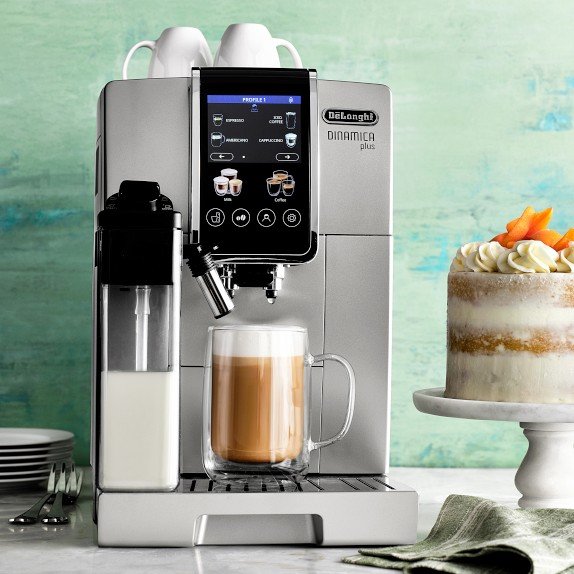
A super-automatic contains a grinder, a dosing system, and a motorized brew group inside one case. You fill the bean hopper and the water tank, press a button, and the machine grinds, tamps, brews, and drops the spent puck into an internal container. Milk depends on the model: some include a manual steam wand or panarello that you operate yourself, while higher variants add an automatic milk carafe that textures milk without your help.
De’Longhi Magnifica S (ECAM22.110). De’Longhi’s published specs list a 15-bar pump, a conical burr grinder with 13 grind settings, and a compact removable brew group. Milk is handled by an adjustable manual frother, so lattes still put you at the steam wand, but grinding, dosing, and tamping are automatic. It is also one of the narrowest super-automatics sold, which matters in a small kitchen.
Philips 3200 Series. Philips lists ceramic disc grinders with 12 grind settings, a 15-bar pump, and its AquaClean water filter, which the company says lengthens the interval between descaling cycles. The standard 3200 ships with a classic milk frother; the LatteGo variant replaces it with an automatic milk system.
The honest trade here is repeatability against ceiling. You give up control over dose and tamp, so the best possible shot is lower than a dialed-in semi-automatic. What you get is the same drink every time, and anyone in the house can make one without a lesson.
Where drink quality actually differs
The grinder decides more than the machine type. A super-automatic with a decent built-in grinder will out-pull a semi-automatic paired with a grinder that cannot grind fine enough for espresso. Our conical vs flat burr grinder guide explains why grind quality is the bottleneck in most home setups.
For straight espresso, a practiced semi-automatic user wins. Adjustable dose and tamp let you tune a shot to a specific bean, and a 58mm commercial-standard portafilter, like the one on the Gaggia Classic Pro, rewards that effort. A super-automatic tamps the same way every time, so it lands in the middle of the quality range on every shot.
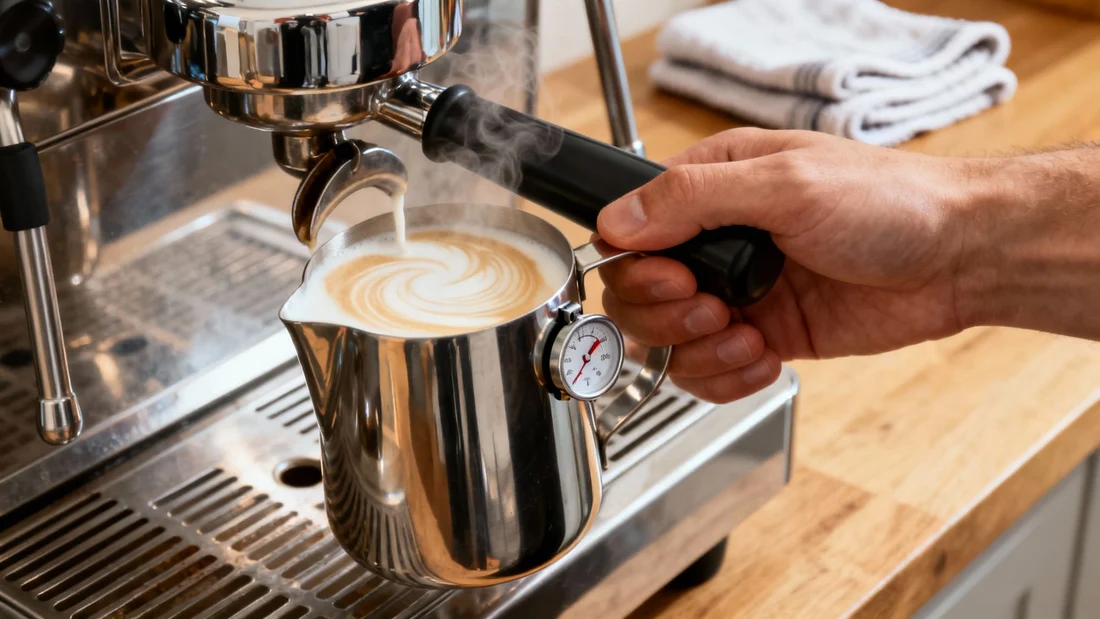
For milk drinks, the gap narrows a lot. Most home lattes are decided by milk texture rather than the last few percent of extraction quality, and a super-automatic with an automatic milk system produces acceptable foam with zero skill. If your household drinks mostly lattes and cappuccinos, ask whether you will actually practice steaming on a semi-automatic or just keep meaning to.
What ownership costs over a few years
Semi-automatics are mechanically simple: a heating system, a pump, and a group head. Maintenance is descaling on schedule, backflushing on machines with a three-way solenoid valve, and replacing the group gasket every year or two. Parts follow standard sizes and cost little. Our boiler types guide covers the heating systems inside these machines.
Super-automatics add a grinder, a dosing chute, and a motorized brew group to the same water circuit. The brew group needs a rinse under the tap about weekly, the grinder chute needs occasional brushing to clear oil buildup, and when something fails, the fix is usually a service center visit rather than a ten-dollar gasket. Water filters like Philips’ AquaClean stretch descaling intervals, but the replacement filters are a recurring cost.
Up front, a super-automatic costs more than a semi-automatic of similar build quality. Over five years, add replacement filters and the higher chance of one professional service visit to the super-automatic column.
Side-by-side on published specs
| Machine | Type | Grinder | Milk | Check price |
|---|---|---|---|---|
| Breville Barista Express | Semi-automatic | Built-in conical burr | Manual steam wand | Check price on Amazon |
| Gaggia Classic Pro | Semi-automatic | Not included | Manual steam wand | Check price on Amazon |
| De’Longhi Magnifica S | Super-automatic | Built-in, 13 settings | Manual frother | Check price on Amazon |
| Philips 3200 Series | Super-automatic | Built-in ceramic, 12 settings | Frother or LatteGo auto | Check price on Amazon |
Which one should you buy?
Buy a semi-automatic if you want the hobby itself: dialing in beans, chasing better shots, learning milk texture by hand. It is the right call if you drink mostly straight espresso or Americanos and you will put in the practice weeks. Skip it if you need good coffee fast on weekday mornings with no learning curve, because an unpracticed semi-automatic makes worse coffee than a super-automatic.
Buy a super-automatic if the household needs one-button drinks, if several people with different skill levels will use the machine, or if milk drinks dominate and nobody wants to learn steaming. Skip it if you care about getting the most out of specialty beans, or if you dislike proprietary parts and service-center repairs.
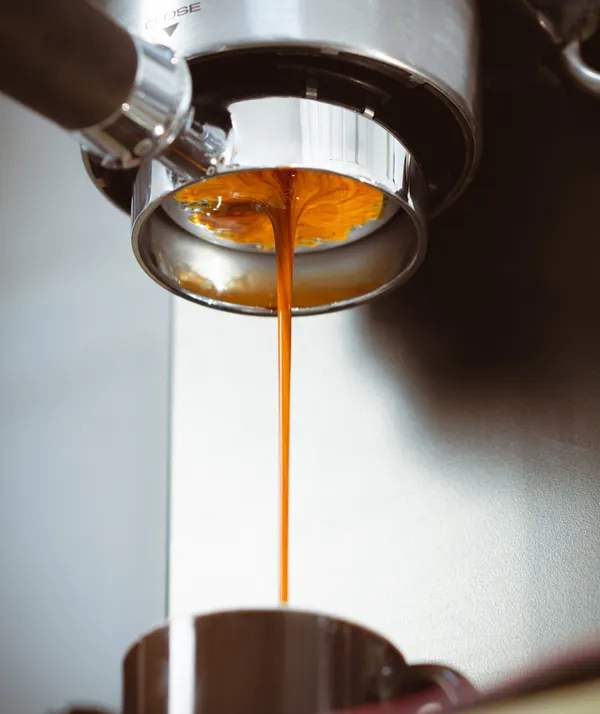
Either way, grind fresh and dose the same amount every time. Those two habits matter more than the badge on the machine.